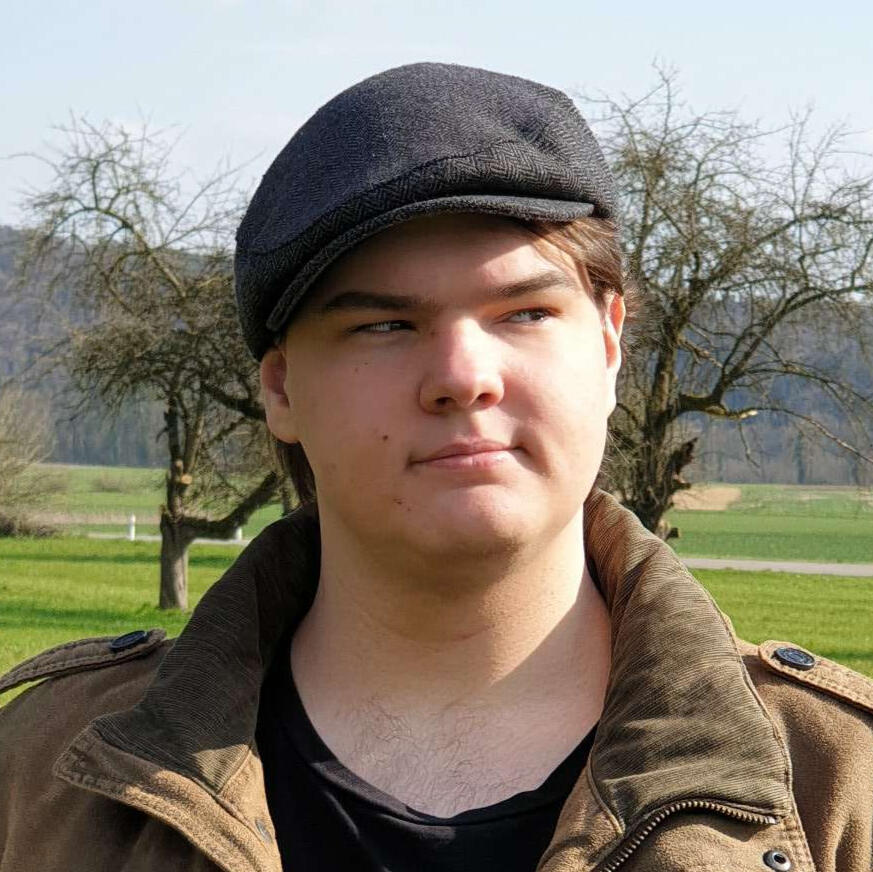
Greetings fellow Humanoid!
I'm Kai and I am a Game Designer (I think).
As you may be able to guess I like games. Enough to make them my job at least. I just like figuring out what makes them tick, how their systems connect, and why they feel good. Whenever I play them I end up disassembling them in my head right away and I use this same mindset to construct my own as well.I'm always focused on making sure each individual part that I work on is in line with the rest of the game, be it the feel, the systems, the mechanics, the level design, the narrative, or anything else.
Check out my best work below!
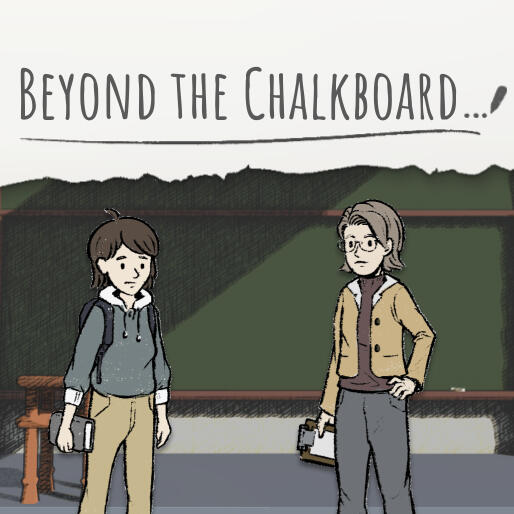
Beyond The Chalkboard is...
a serious game prototype developed in cooperation with the Barrier-Free Teaching Project of TH Cologne. Intended to be played by professors and teaching staff, it aims to build empathy within players for students struggling with anxiety and depression.
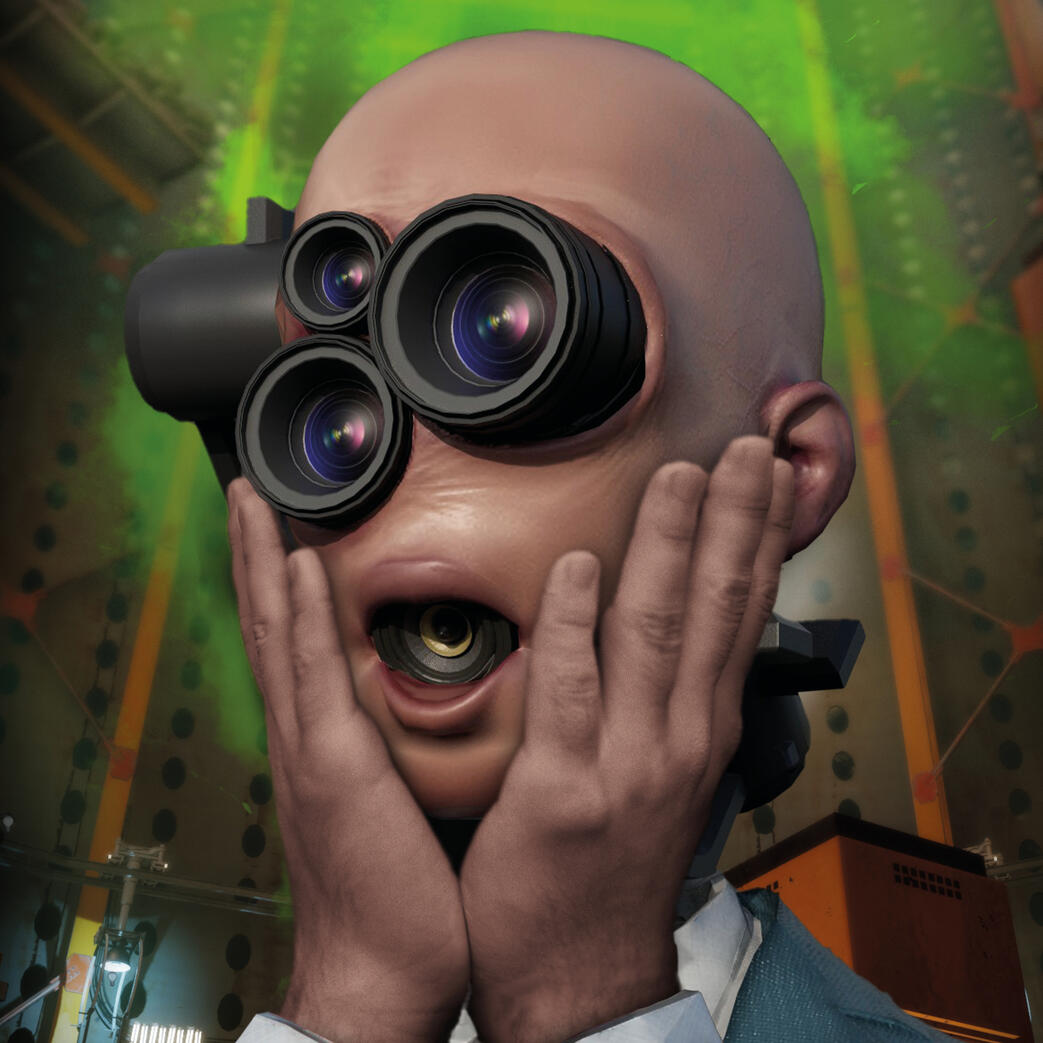
Greenwashing is...
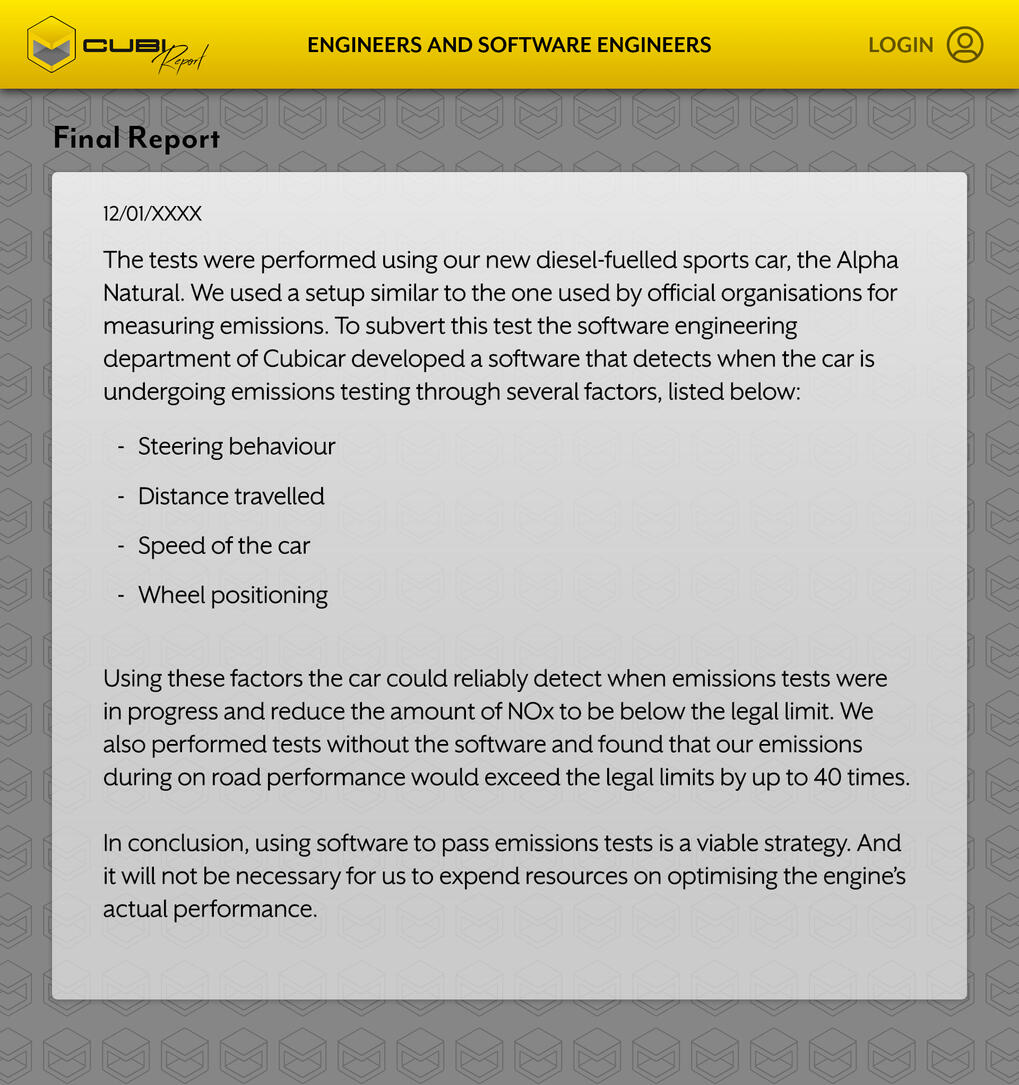
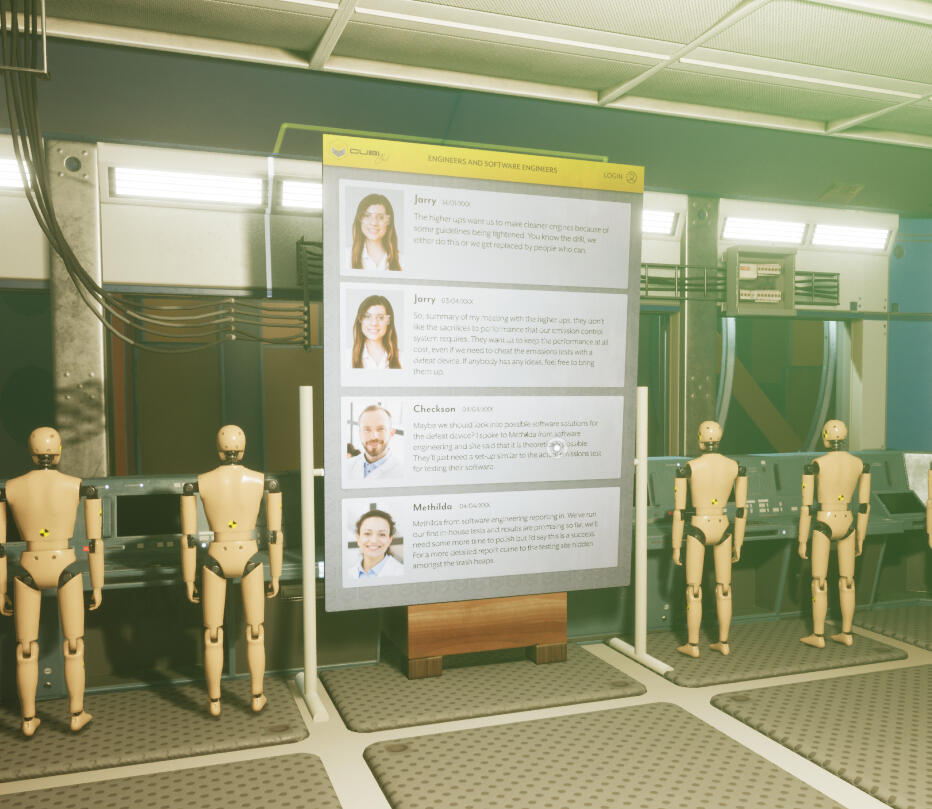
an experimental impact game aiming to teach the player about the different forms of greenwashing. Explore the headquarters of Cubicar, uncover their misdeeds, and scream at the Camerahead.
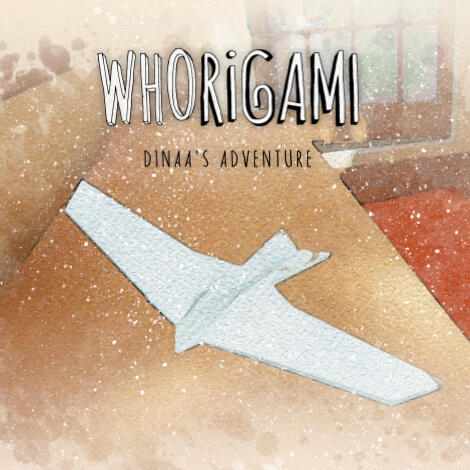
Whorigami is...
a narrative-driven game about Dinaa, a blank piece of paper, lost in the world, wondering who it is. Embark on a journey of self-discovery and growth as you mimic various animals and experiment with their movement.
Beyond the Chalkboard
Genre: Life-sim, Serious/Impact Game, Point & Click
Themes: Narrative, Anxiety & Depression, Mental Health
Platform: Windows
Roles: Game Designer, Project Lead
Production year: 2023
In this project, I was responsible for handling interactions, cameras, dialogue, and the basic blockout of the environments. I also worked closely with my fellow designer on establishing the basics of our system before I went on to refine them further.
Aside from that, as Project Lead, I was also in charge of project management and client communication, and also took care of most of the design documentation.
Systems
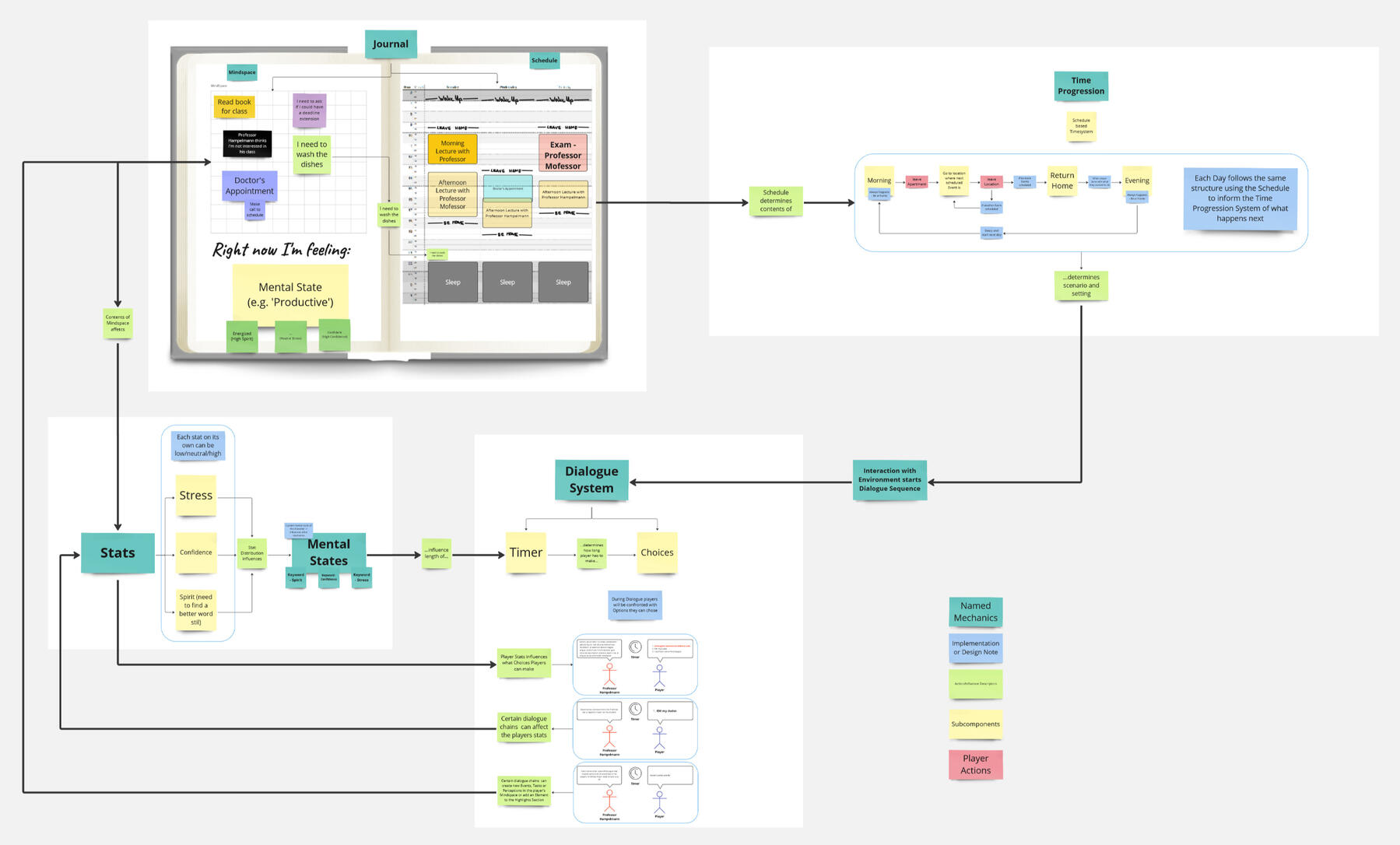
I drafted the initial version of our systems together with our other designer. We built them based on the concepts the team had agreed on during the initial brainstorming and radjusted them based on documents provided by our clients.Afterwards, I further refined them, and documented them in a general overview on our Miro board for review by my codesigner. This let us quickly and efficiently settle on the basic requirements which we passed on to the programmers for implementation.
Dialogue & Interactions
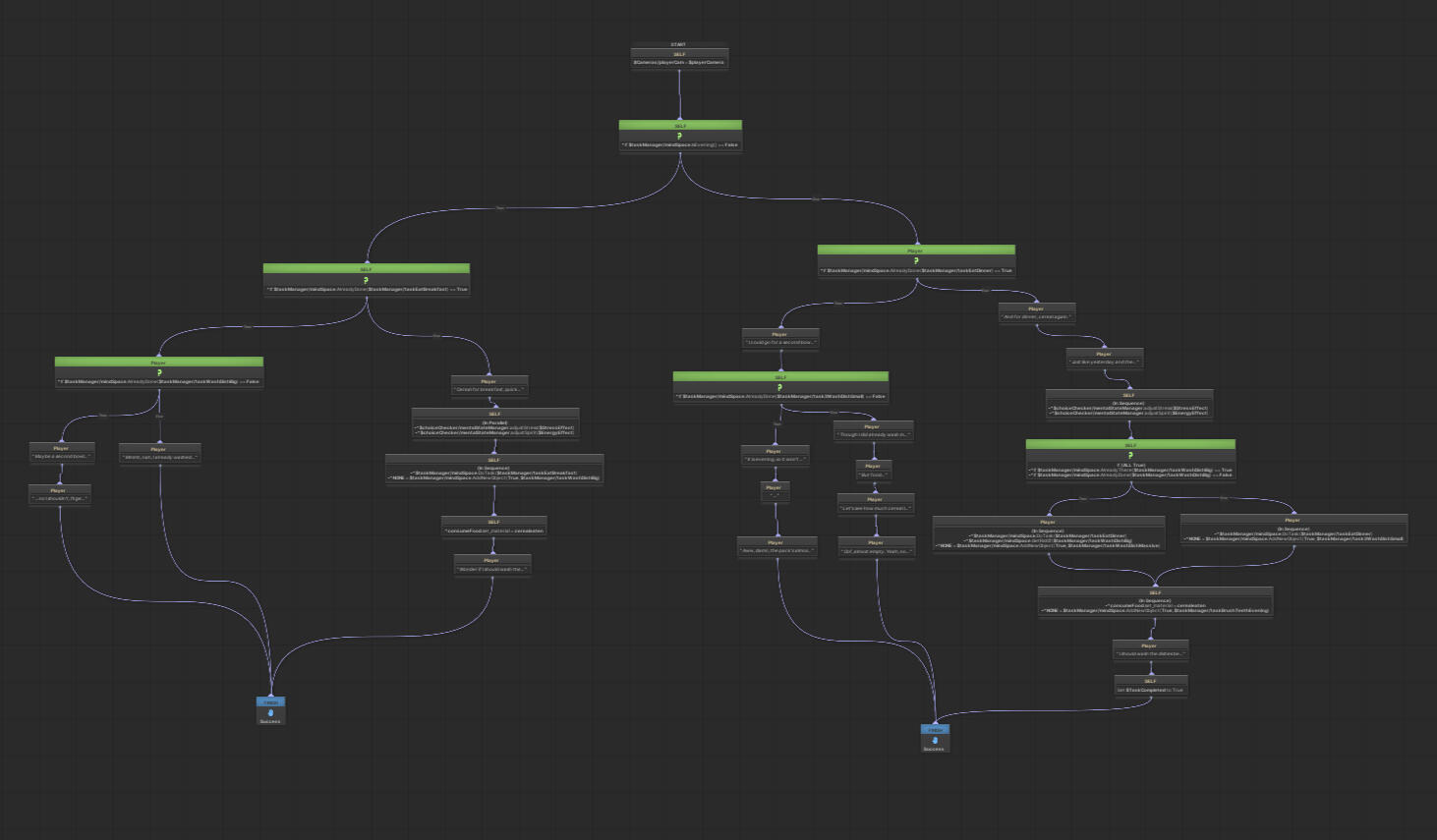
I built all of the dialogues and interactions with NodeCanvas. Through its versatile toolbox, I handled just about anything from the creation and completion of tasks in the Journal/Mindspace to the complex branching dialogue.
I made sure to work closely with our programmers so I could easily access the relevant aspects of our systems through NodeCanvas. As a result, they didn't need to waste time on unimportant, tedious tasks.
Cameras
I paid special attention to the cameras in our game. As the game mostly consists of dialogue, I made sure that every interaction has more going on to further engage the player. The camera changes its focus every time the player interacts with an object. And if they're talking to somebody it focuses on the current speaker.While moving the camera is slightly delayed and turns a bit to give the game a more dynamic feel and make it easier to select between interactable objects near each other.
Documentation
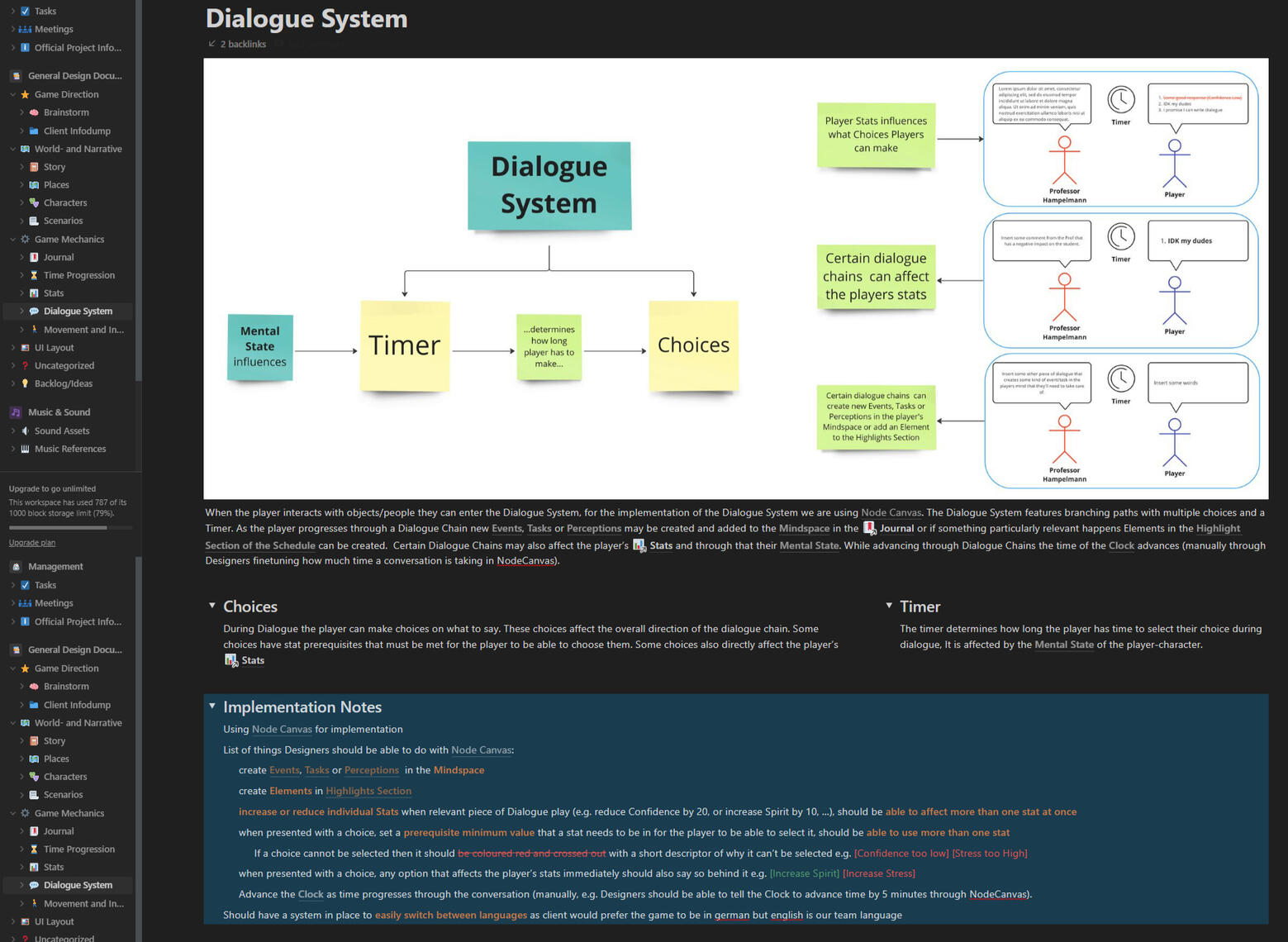
As the game was quite complex, I wrote a detailed and comprehensive documentation of our system and game elements in Notion.I also wrote a summarised set of Implementation Notes for each mechanic or system the programmers needed to implement. Through that, I enabled them to work freely
as they saw fit, needing to consult me only if they had questions regarding the notes. Any unclarities they asked about, I answered quickly and then amended in the Notes.
Greenwashing
Genre: Impact Game, First-Person Walking Sim
Themes: Environmental, Climate Change, Activism
Platform: Windows
Roles: Game Designer, Project Lead
Production year: 2021
In this project, I mosty focused on project management and game direction. As this game was all about conveying a message to the player, I spent a lot of time analysing it. I also researched how we could best communicate that message.Additionally, I was also in charge of generating all of the written content. Consequently, I also designed the narrative which emerges from the player's experience of the game.
Message Analysis & Research
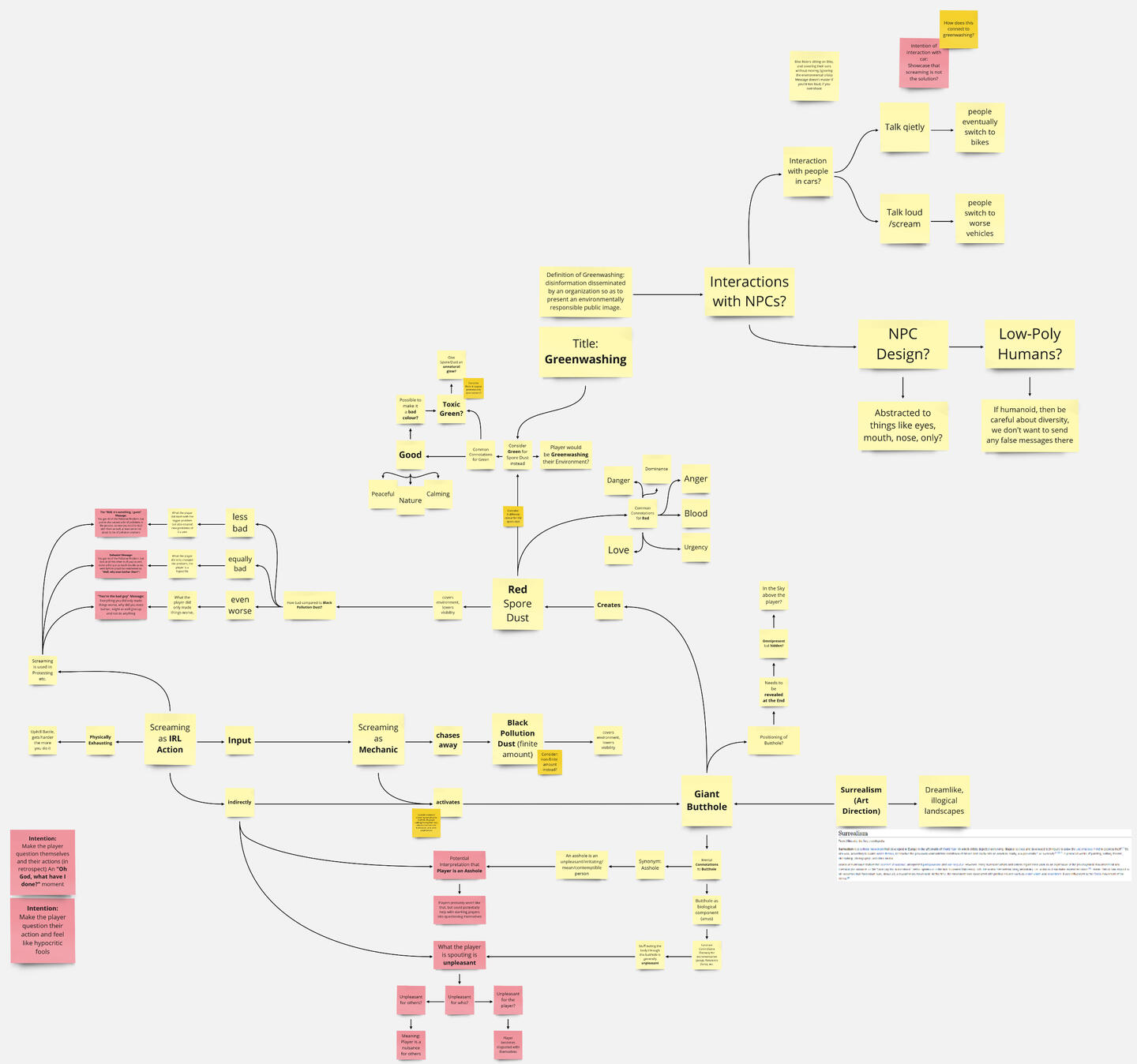
The message and the impact on the player were some of the game's most important aspects. So, I thoroughly analysed each component of our concept in a flowchart. Thanks to this we were able to identify potential contradictions and weak points in our concept very early on and adjust accordingly.I also spent a lot of time researching examples of greenwashing, such as the Volkswagen emissions scandal. Through this research, we managed to craft the image of Cubicar into that of a realistically believable company.
Narrative Content
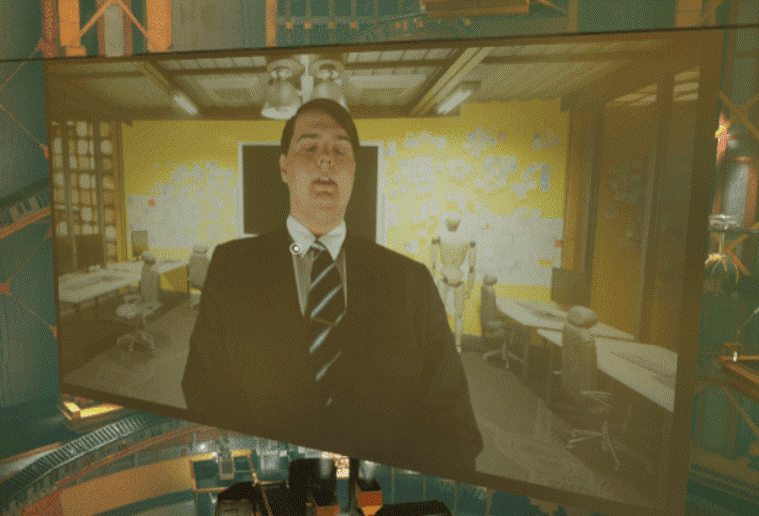
I wrote the information collectibles based on the research I did on greenwashing so that they would convey our desired message to the player. I also wrote a substantial amount of the Cubicar slogans as well as the voice lines which guide the player through the facility.Additionally, I also wrote and acted out the script for the game's ending cutscene. I paid special attention to conveying the personality of the old and new CEO of Cubicar (both played by me).
Whorigami
Genre: Story-driven adventure platformer
Themes: Narrative, Self-Discovery, Coming of Age
Platform: Windows
Roles: Game Designer, Project Lead
Production year: 2021
I designed and analysed the narrative structure of the game, wrote the narrator’s script, and designed the second level of the game. I was also in charge of project management and directed our programmer when we recorded the narrator's voice lines.
Narrative
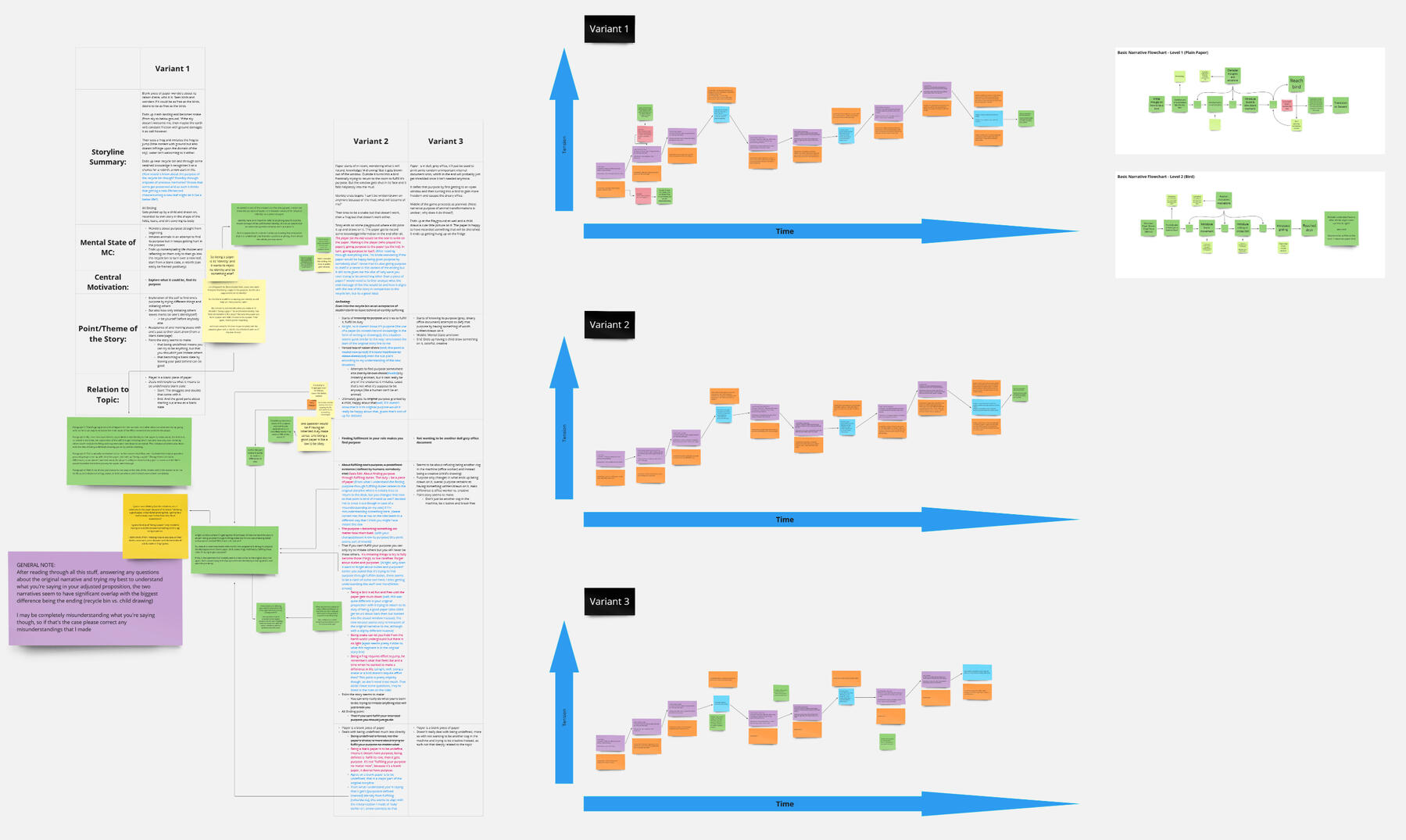
I constructed the narrative structure for the game based on the themes we wanted to express. I analysed various suggestions from within the team for the development of their tension over time as well as the representation of our desired themes.I also wrote the script in parallel to the design of our levels. As the first level was the responsibility of my codesigner I very quickly created a basic narrative flowchart which included the order in which the player would learn about their movement mechanics.
Level Design
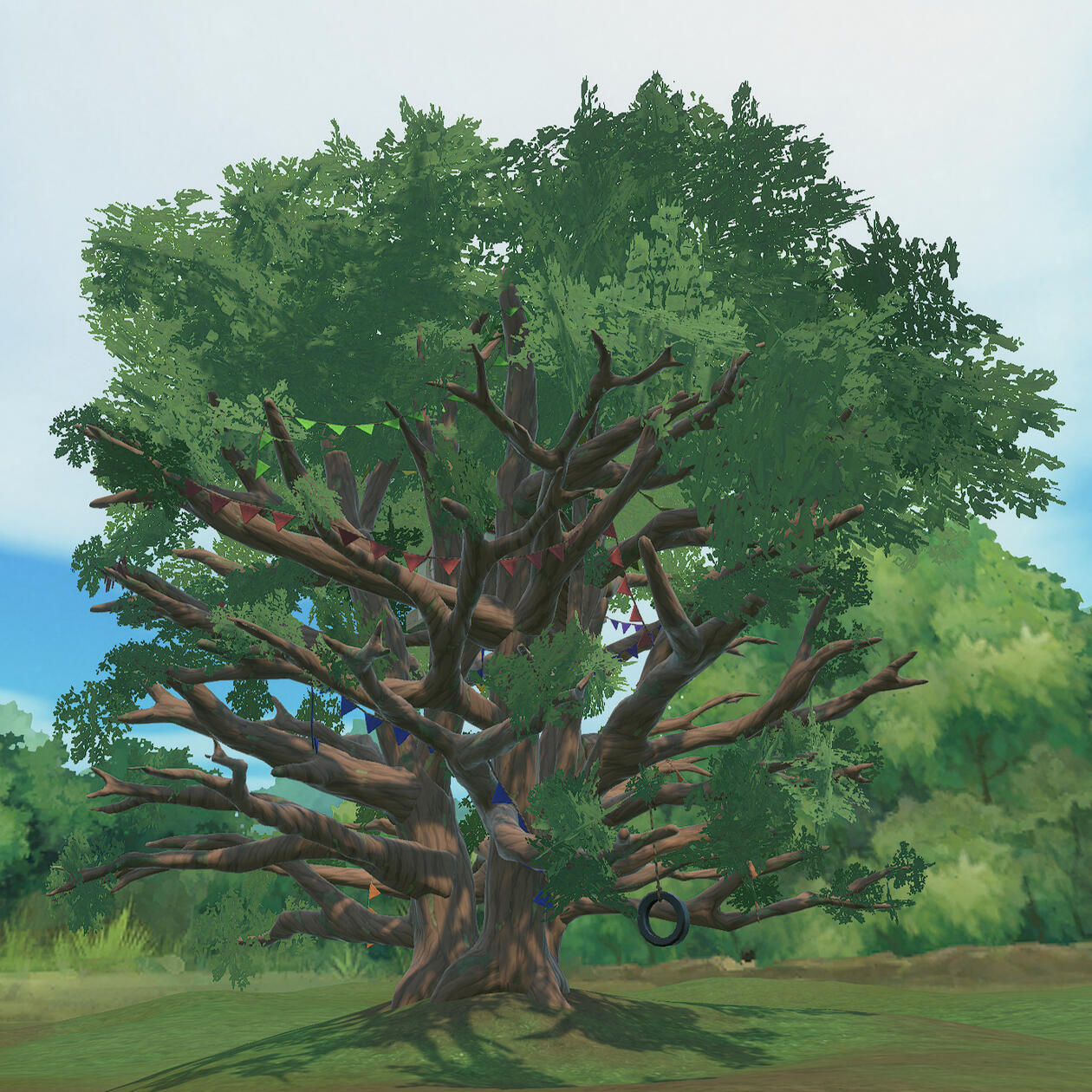
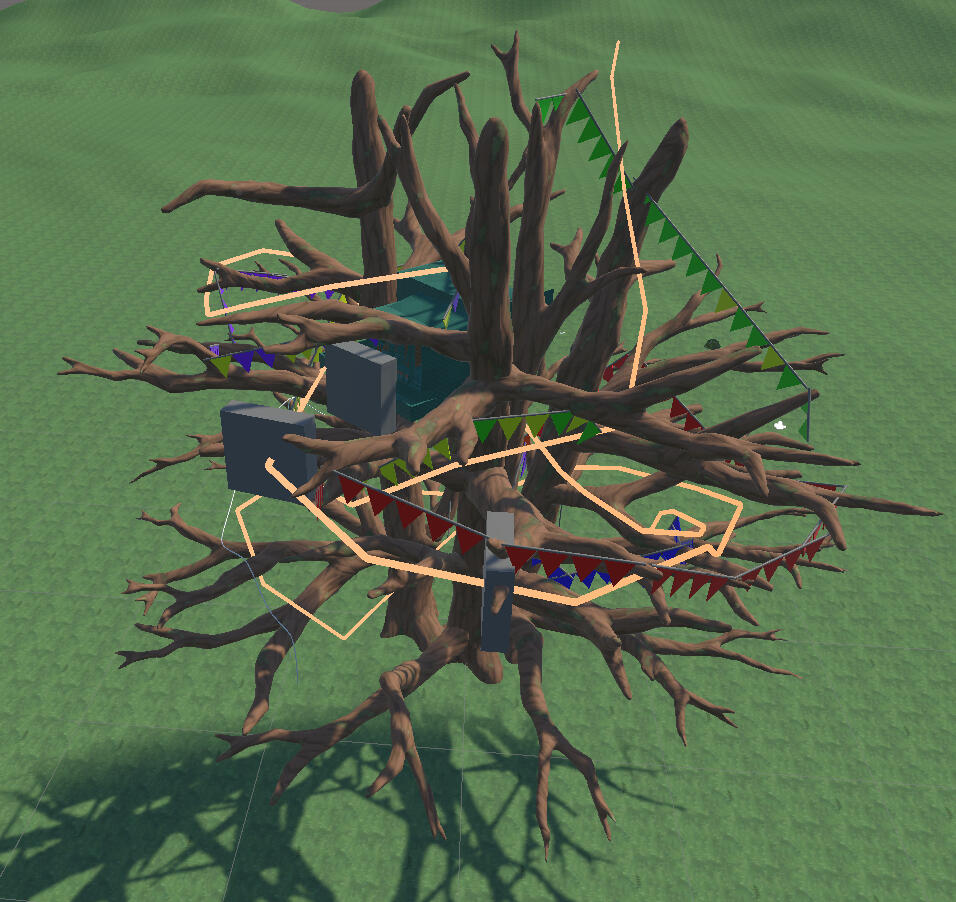
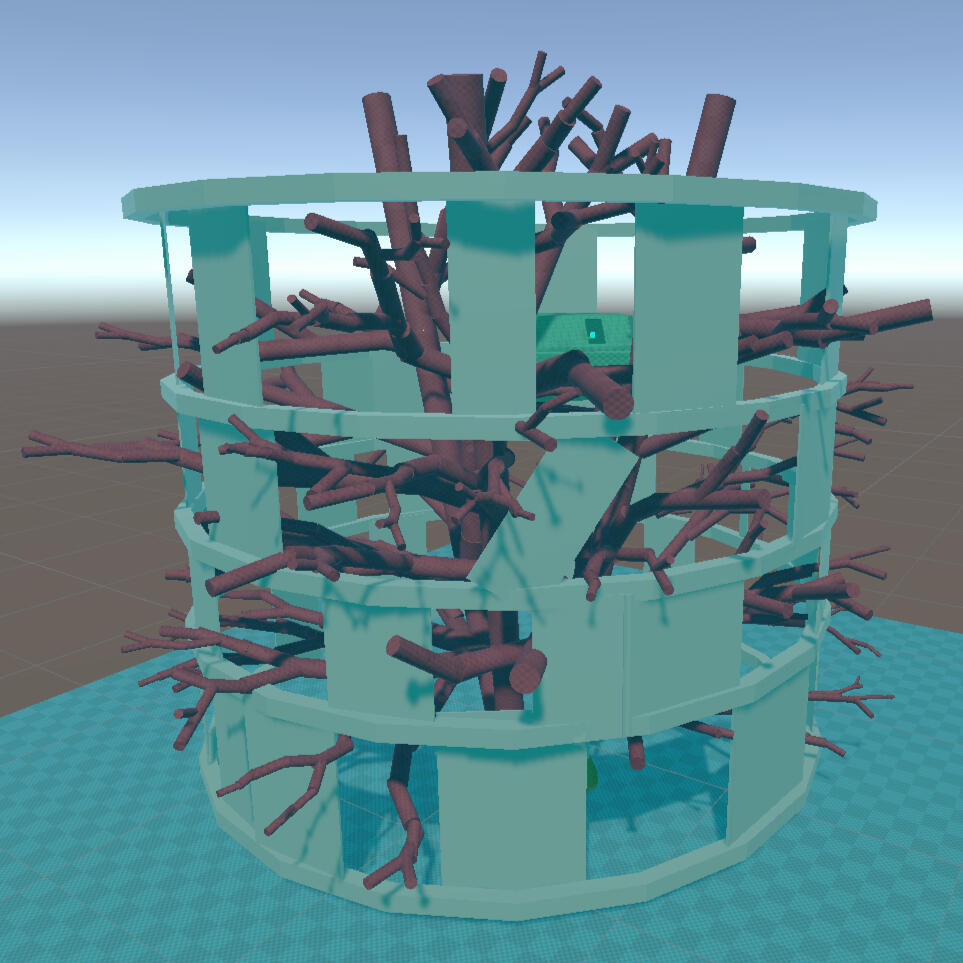
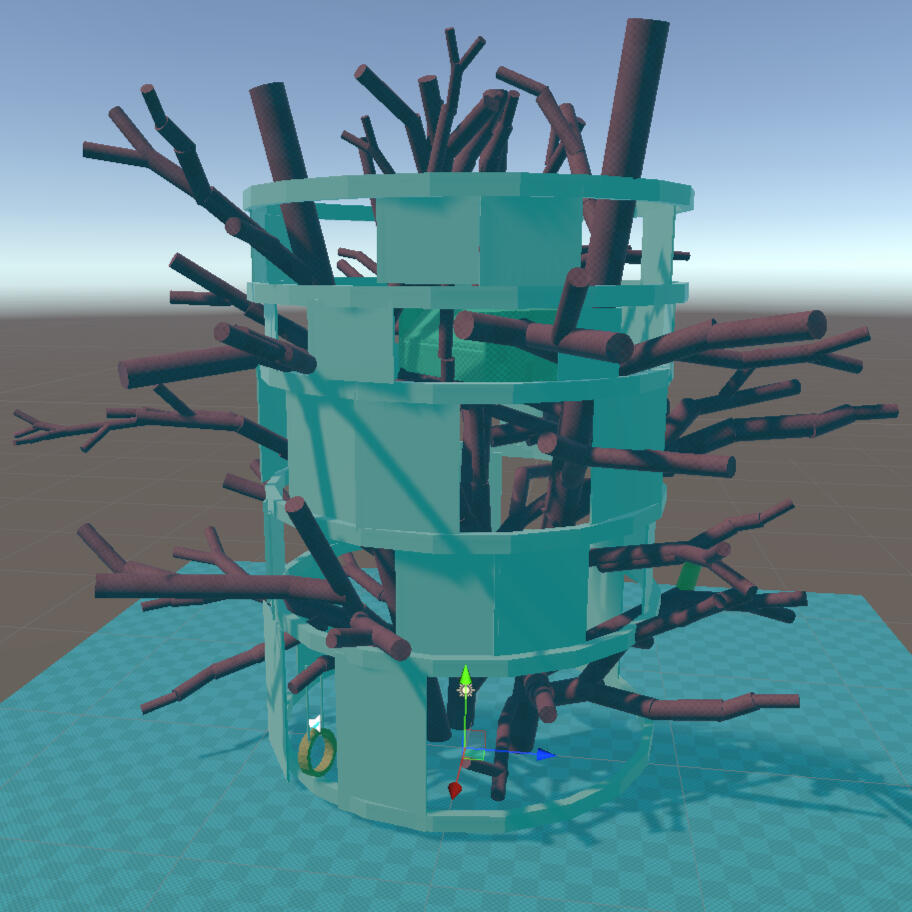
I designed the second level of the game, in which the player-character takes on the shape of a bird, around the theme of 'breaking free'. I made the level as diegetic as I could to add to the immersion and theme of the level.As the movement of the bird was designed around flying up and down to build up speed. I mapped out the 'empty space' the player could fly through in an outer and inner cylinder. Then, I just placed the branch prefabs, I made for prototypeing so as to weave around this empty space.For the narrative path of the game, I placed coloured flags throughout the tree for the player to follow.
Roro's Fishy Adventure is...
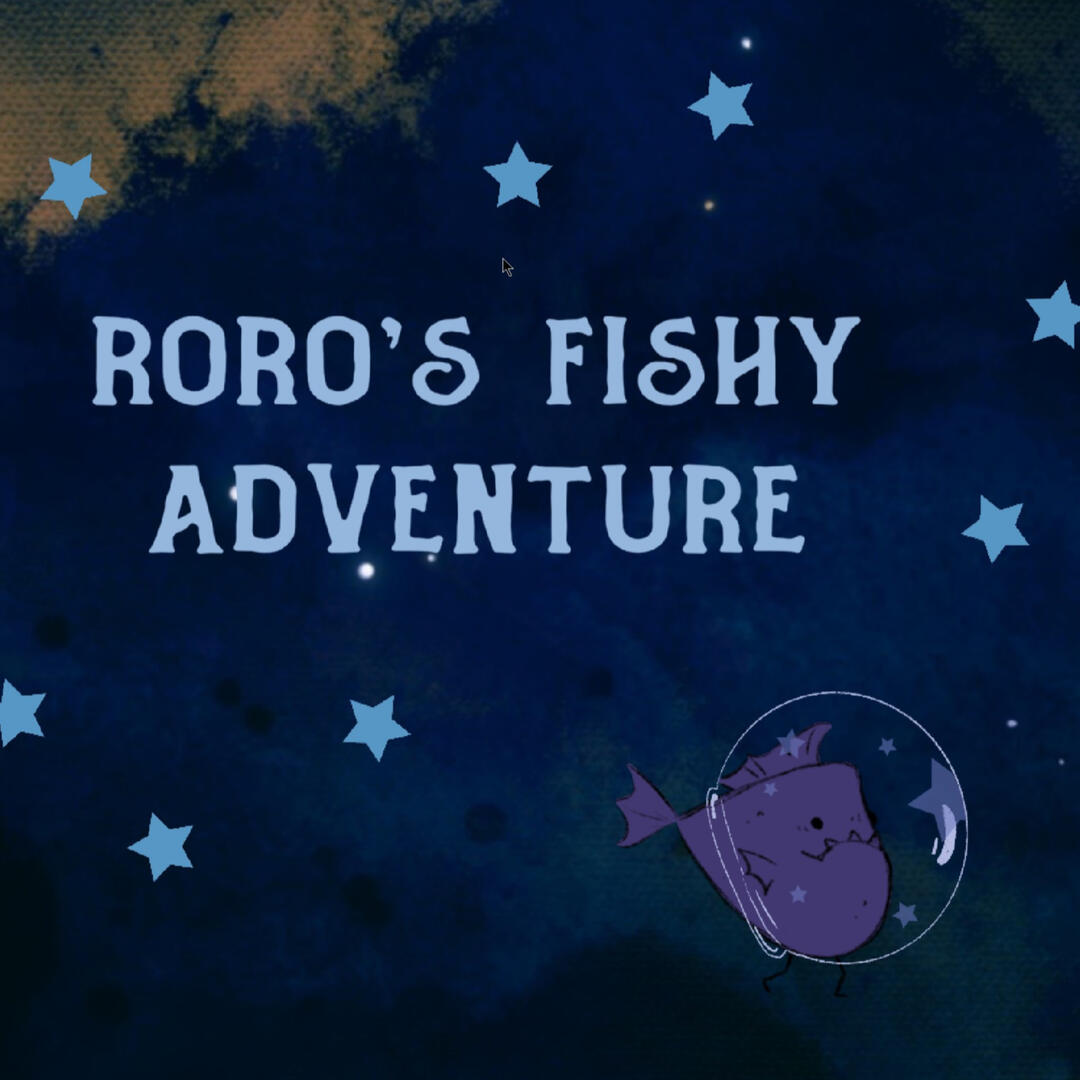
a cooperative puzzle platformer. Play as the anglerfish siblings Harold and Rodney, who set out to climb a lighthouse built by an ancient civilization of crab people. Work together as you explore the world, bite things you shouldn't bite, and build bridges from fallen stars.
Roro's Fishy Adventure
Genre: Coop Puzzle Platformer
Themes: Childhood Curiosity
Platform: Windows
Roles: Game Designer, Project Lead
Production year: 2023
I worked on the core mechanics and level design for both iterations of the game and additionally paid special attention to the movement for the 2nd. I was also in charge of project management for the entirety of the project.
Core Puzzle Mechanics
The first iteration of the
Movement Mechanics
I designed the second level of the game, in which the player-character takes on the shape of a bird, around the theme of 'breaking free'. I made the level as diegetic as I could to add to the immersion and theme of the level.As the movement of the bird was designed around flying up and down to build up speed, I designed the tree for the player to weave in between branches as much as possible.
Level Design
I designed the second level of the game, in which the player-character takes on the shape of a bird, around the theme of 'breaking free'. I made the level as diegetic as I could to add to the immersion and theme of the level.As the movement of the bird was designed around flying up and down to build up speed, I designed the tree for the player to weave in between branches as much as possible.